 Columbia County, FL uses javascript to enhance its website and provide the public with useful features.
Because of this, many features will not work. Please enable javascript in your browser to get the best possible experience while on our site.
Winfield Solid Waste Facility
Holiday Schedule
The Winfield Solid Waste Facility will be closed on the following dates.
| Holiday | Date |
| New Years Day | Monday, January 1, 2024 |
| Memorial Day | Monday, May 27, 2024 |
| Independence Day | Thursday, July 4, 2024 |
| Labor Day | Monday, September 2, 2024 |
| Thanksgiving | Thursday, November 28, 2024 |
| Christmas | Wednesday, December 25, 2024 |
| New Years Day | Wednesday, January 1, 2025 |
Weekend Schedule
The Winfield Solid Waste Facility will be open on the following 1st Saturdays of each month.
January 6, 2024 |
July 6, 2024 |
February 3, 2024 |
August 3, 2024 |
March 2, 2024 |
September 7, 2024 |
April 6, 2024 |
October 5, 2024 |
May 4, 2024 |
November 2, 2024 |
June 1, 2024 |
December 7, 2024 |
Winfield Dumping Fees
| Class | Description | Price |
| Class I | Residential Household Food Garbage, Commercial Food Garbage, Office Trash, Roadside Litter, CCA-Pressure Treated Wood & Sludge | $60.00 per ton Minimum Charge: less than 60 lbs: $ 2.00 flat fee |
| Class III | Construction & Demolition Debris, shingles, brick Concrete, wood, asphalt, yard trash, rubbish, and furniture. | $41.00 per ton Minimum Charge: less than 60 lbs:$ 2.00 flat fee |
| Asbestos | Friable or Non-Friable Requires 24hr notice to the Solid Waste Department Generators Waste Manifest, Double Bagged in 6ml Bags | $180.00 per ton |
| White Goods & Scrap Metal | White Good Appliances (stoves, refrigerators, freezers, washers, dryers, hot water heaters and scrap metals from: | Individual Residential Households only: No Charge Businesses: $28.00 per ton |
| Brown Goods | Electronic Goods,Cathode Ray Tubes found in TV's, Hot Water Heaters, All Computer Components, Microwaves and Conventional Type Ovens. | $70.00 per ton |
| Tires | Whole light truck / passenger type tires (Bulk) | $165.00 per ton |
| Whole tires less than 4 (light truck or passenger type only) | $ 2.00 each | |
| Commercial Trucks /Heavy Equipment tires | $165.00 per ton | |
| Any other waste materials deposit of which will entail additional or unusual labor requirements from Solid Waste Employees | $ 5.00 per ton in addition to the appropriate tippage fee | |
| Mobile Home Disposal | All appliances, electronics and food waste must be removed. Tires and wheels must be removed after dropping. The tires would be charged at the tire disposal rate. Axles and tongue can be removed after delivery. Frames will not be returned. 24-hr. notice would be required to prepare a location for easy access for customer to remove tires, wheels, axles and tongue. Cannot accept mobile homes during rainy conditions. Title or proof of ownership (free of liens) required. | $250.00 per side |
WE ACCEPT THE FOLLOWING FOR PAYMENT: CASH, CHECK OR CREDIT CARDS
Needle Disposal
A safe way to throw away needles Need help in disposing of needles from your home. This guide will help you in disposing of needles, syringes with needles, and lancets that have been used by you or a family member in the treatment at home of an allergy, acute illness, or chronic disease such as diabetes.
The following link will give you additional information from the Florida Department of Health
http://www.floridahealth.gov/Environmental-Health/biomedical-waste/home-management-of-sharps.html
You can download the following informational sheet from the Florida DOH to assist you in preparing your needles for disposal in your household garbage: Informational Sheet.pdf
Solid Wastes
As provided by Resolution No. 2013R-46; effective November 1, 2013; adopted on October 17, 2013.
It
is the policy of Columbia County that waste other than normal Class I or Class III waste, as determined by the Solid Waste Director requires calling the Solid Waste Department at (386)752-6050 prior to disposal.
Prohibited Waste Not Accepted:
- Automobile Gas TanksAny Free Flowing Liquids
- Any Hazardous/Toxic Waste
Residential Household Paints, Pesticides and Chemicals:
Small quantities of paint and chemicals are accepted from individual residential households only no businesses to include latex or oil based paint, household pesticides or cleaners in 1 gallon containers or smaller at a rate of $75.00 per ton. These items are placed in a storage area until such time a Hazardous Waste Contractor comes in and inventories packages and ships to a Hazardous Waste Facility.
Waste Collection Contractor: Waste Pro
(386-758-7800)
View map to see your collection day Columbia County administers the contract for your curbside collection through a company known as Waste Pro, which provides for once (1) a week pickup for household garbage, and yard waste. Be sure that your items are at the curb by 7:00 A.M. on your collection day.
View the details regarding Waste Pro services to Columbia County residents (PDF).
Any additional questions concerning collection should be directed to (386) 758-7800.
Waste Pro will observe the following holidays: No Collection on these days.
| Holiday | Date | |
| New Years Day | Monday, January 1, 2024 | |
| Memorial Day | Monday, May 27, 2024 | |
| Independence Day | Thursday, July 4, 2024 | |
| Labor Day | Monday, September 2, 2024 | |
| Thanksgiving | Thursday, November 28, 2024 | |
| Christmas | Wednesday, December 25, 2024 | |
| New Years Day |
|
Garbage collection on these days will be made up with collection falling one- day later. Example: Monday May 30, 2023 – Memorial Day will be collected on Tuesday, June 1st. Tuesday’s collection will be on Wednesday the 2nd and Wednesday’s collection will be on Thursday the 3rd and Thursday’s collection will be on Friday the 4th and Friday’s collection will be on Saturday the 5th.
Recycling Department
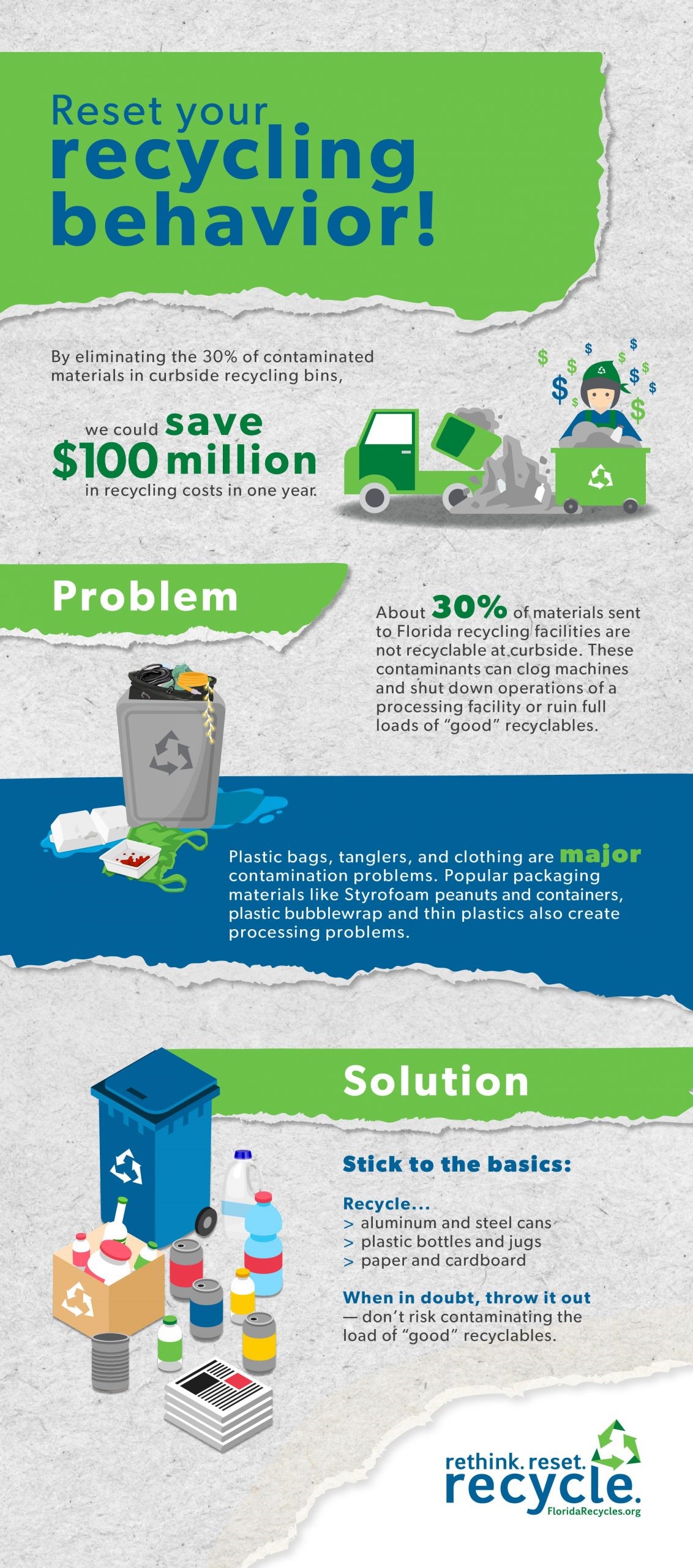
For your convenience there are three drop-off locations in Columbia County
The locations are:
- Branford Highway- 508 SW State Road 247, Lake City, FL. 32025
- Fort White- 242 SW George Glen, Fort White, FL. 32038
- Winfield Solid Waste Facility- 1347 NW Oosterhoudt Lane, Lake City, FL. 32055
What's Recycled in Columbia County?
- Clear plastic with recycle symbol 1 or 2. (Soda bottles and Natural milk jugs)
- Colored Plastic with recycle symbol 2 (Detergent / Shampoo Bottles)
- Aluminum and Steel cans
- Clear Glass
- Newsprint (NO magazines or inserts)
- Cardboard (NO wax coated)
How can you help the county recycle?
- Please Clean and Prepare the recycling before putting it in the Recycling Container.
- Do NOT put bags in our Recycling Container’s.
- Do NOT put household garbage or chemicals in our Recycling Container’s
- Please Encourage others to Recycle
- Help us inform others on what NOT to recycle.
Any questions concerning recycling please call the Winfield Solid Waste Facility at 386-752-6050.
Thank You for all your help in keeping our County on the right path: Rethink, Reset, and Recycle.
Mosquito Control Department
The Florida Department of Health released a Mosquito Borne Illness Advisory
The Florida Department of Health released a Mosquito Borne Illness Advisory for the entire state of Florida specific to malaria. The statewide advisory was released to bring awareness to the importance of mosquito prevention and protection for residents and visitors to Florida, especially with Fourth of July celebrations upcoming.
The Florida Department of Health Issues Mosquito-Borne Illnesses Advisory | Florida Department of Health (floridahealth.gov) regarding the Malaria.
Printable materials:
(PDF) Mosquito-Borne Illnesses (floridahealth.gov)
Drain and Cover
- DRAIN: water from garbage cans, houseDrain standing water from birdbaths, garbage cans, and other containers that can collect water.gutters, pool covers, coolers, toys, flower pots or any other containers where sprinkler or rain water has collected.
- EMPTY and CLEAN: Birdbaths and pet's water bowls at least once or twice a week.
- PROTECT: Boats and vehicles from rain with tarps that don't accumulate water.
- MAINTAIN: Screened entry way's prevent mosquitoes!The water balance (poolchemistry) of swimming pools.Empty plastic swimming pools when not in use. Repair broken screens on windows, doors, porches, and patios.
- CLOTHING: If you must be outside whenmosquitoes are active, cover up. Wear shoes, socks, long pants, and long sleeves.
- REPELLENT: Apply mosquito repellent to bare skin and clothing. Always use repellents according to the label. Repellents with DEET, picaridin, oil of lemon eucalyptus, para-menthane-diol, and IR3535 are effective. Use netting to protect children younger than 2 months.
View the page to find your mosquito control schedule.
There are more than 75 mosquito species in Florida, individual counties may have 40 species, fewer than two dozen species throughout Florida are important enough as pest or vectors to warrant control, however, and in given locality, this number is usually less than five.The first step in determining which mosquitoes poses a nuisance, or is an economic or health-related pest or vector. A nuisance mosquito bothers people, typically in and around homes or in a recreational area. One definition of a health related mosquito problem is the ability of a mosquito to transmit infectious diseases. In Florida, this definition includes only mosquitoes that spread dog heartworm, St. Louis Encephalitis and Eastern Equine Encephalitis. However, any mosquito that bites or annoys people can be considered a health problem, particularly for individuals that are allergic to mosquito bites or which suffer from entomophobia, (i.e. A fear of insects).
Habitat/Source Reduction
Mosquito habitats and ways individuals can protect themselves from mosquito attack. Source reduction is usually the most effective of the techniques available and is accomplished by eliminating mosquito breeding sites.
Containers
This can be a simple as properly discarding old containers which hold water capable of producing Aedes aegypti, A.e. albopictus or Culex spp. Containers such as flower pots, cans and tires are excellent habitats for mosquitoes to breed. A container breeding mosquito problem can be solved by properly disposing of such items, covering them or tipping them over to ensure that they do not collect water.
Water
Small man-made ponds, storm water or waste water retention areas are also excellent breeding habitats, effective control include period drainage, providing deep water sanctuary for predator / larvivorious fish, minimizing emergent and standing vegetation and maintaining steep banks.
Swamps
Environmental laws greatly restrict habitat manipulation in these areas, making permanent control here difficult, which can produce Culex, Anopheles, and Culiseta species of mosquitoes.
Temporarily Flooded Locations
Pastures and agricultural lands are enormous mosquito producers, frequently generating huge broods of mosquitoes, (Aedes, Psorophora and Culex). Improved drainage is one effective tool to generate source reduction.
Mosquito Control Treatments Provided
Adulticiding
Columbia County provides for spraying the county using various chemicals to kill adult mosquitoes, and are generally applied using a truck mounted ULV spray unit.
Larviciding
Columbia County provides for the chemical treatment of larval mosquitoes (either I-IV Instar) by applying chemicals to roadside ditches, swales, retention ponds, treatment ponds and small bodies of water, man-made ponds. Most currently used larvicides, when applied properly, are efficacious and environmentally safe, both to aquatic animals and humans.
Spraying Requirements
Florida Statues on mosquito surveillance are concerned only with the monitoring of adults. According to these statues, before adulticides can be applied, a monitoring program must detect an increase in the population above a predetermined baseline. Or by using a techniques known as Landing Rates, landing rates are determined using this technique comprises a count of the number of mosquitoes that land on a person in a given amount of time. This is useful for evaluating activity for day biting, and container breeding mosquitoes, which are common around homes. Also used is telephonic service request, which citizens can call the Mosquito Control Department at 386-752-6050 to log a complaint and request mosquito control services.
Solid Waste Franchise Collection Application Form
Questions? Call Solid Waste Department at
386-752-6050